
Suspension and Steering Parts Explained
Suspension and steering parts work together to keep your Honda or Acura stable, predictable, and comfortable on the road. When one component starts to wear out, the change may show up as loose steering, uneven ride height, clunking, vibration, or handling that no longer feels confident. The challenge is that many symptoms overlap, so the best way to narrow down the right repair is to understand what each part family does. From leaf springs that support ride height to steering linkage parts that help maintain control, the right diagnosis starts with function, not guesswork.
Why suspension and steering parts matter for ride quality and control
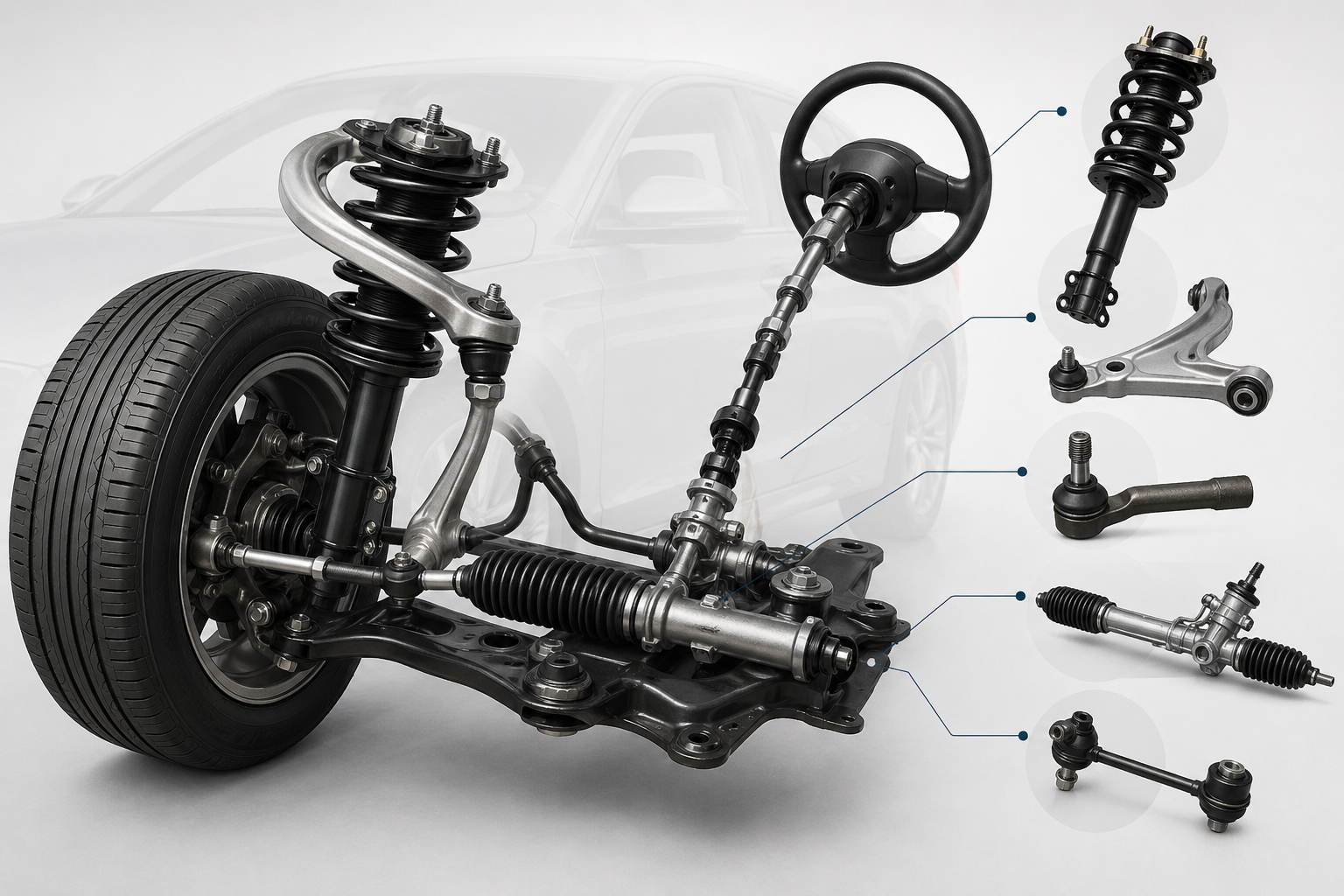
How steering geometry affects handling
Steering geometry determines how your vehicle responds when you turn the wheel, track straight, and return to center. Angles such as toe, caster, and camber all influence stability, but so do the parts that hold the steering linkage in position. When a steering component develops play, the result can feel vague or delayed even if the tire condition looks normal at first glance. That looseness can also make the vehicle wander on the highway or require constant correction.
How suspension components support stability, comfort, and tire wear
Suspension parts carry weight, absorb impacts, and keep the tires planted as the road surface changes. Springs support ride height, control arms and related hardware manage wheel movement, and bracing components can help reduce flex in performance-oriented setups. When those parts wear or sag, ride comfort often suffers first, but tire wear and handling can follow quickly. A vehicle that leans more in turns or sits unevenly at one end may already be asking for suspension attention.
Common signs your suspension or steering system needs attention
Wandering or loose steering
If the vehicle drifts within the lane or feels slow to respond to steering input, play in the linkage or worn front-end components may be involved. Highway driving usually makes this symptom easier to notice because small corrections become frequent.
Uneven ride height or rear-end sag
A low rear stance, a side-to-side height difference, or a vehicle that squats more than expected under cargo can point to spring fatigue. This is especially important on trucks and SUVs that carry weight, tow, or see regular utility use.
Excessive body roll or instability in turns
More lean in corners, reduced confidence during lane changes, or a general floaty feel can signal worn suspension support parts. In some setups, drivers may also look into chassis bracing if they want a more connected feel from the front end.
Vibration, clunking, or poor tracking
Clunks over bumps, vibration through the steering wheel, and a tendency to pull or track poorly can all be signs that components are worn, loose, or no longer holding proper alignment. These symptoms deserve a close inspection before tire wear gets worse.
What pitman arms and idler arms do
On steering systems that use this style of linkage, the pitman arm transfers motion from the steering gearbox into the center link, while the idler arm helps support that linkage from the opposite side. Together, they help keep steering movement controlled and consistent. When either part develops excessive play, the linkage may no longer stay properly positioned under load.
Symptoms of worn pitman or idler arms
Common signs include loose steering feel, wandering, clunking from the front end, and uneven tire wear caused by unstable tracking. Drivers may also notice that the vehicle feels less precise over bumps or when making small steering corrections.
When leaf springs need replacement
How leaf springs support load and ride height
Leaf springs do more than cushion the rear of the vehicle. They support vehicle weight, help maintain ride height, and influence stability when the cargo area or hitch is under load. Because they work every time the suspension cycles, they gradually lose strength with age, mileage, and repeated heavy use.
Signs of cracked, sagging, or noisy leaf springs
A sagging rear end, visible cracking, broken leaves, metal-to-metal noise, or reduced load support are common warning signs. Some drivers first notice the problem when the vehicle sits lower than normal after loading cargo, while others hear creaking or clunking from the rear suspension.
Why load capacity and vehicle use matter
Vehicles used for hauling, towing, or frequent heavy loads place more stress on rear springs, so service life can vary widely. If the rear suspension is no longer supporting the vehicle properly, review replacement leaf springs that match the vehicle’s load demands and intended use.
Lift kits and related suspension parts
Why owners install lift components
Lift components are commonly installed to increase ground clearance, create space for a different tire setup, or better suit a vehicle for trail use and rougher terrain. For some owners, the goal is appearance. For others, it is added clearance and capability.
Ride height, clearance, and alignment considerations
Any change in ride height can affect suspension angles, steering feel, and alignment. That means a lift-related project is not just about raising the vehicle. It may also involve hardware that supports the geometry change and helps keep drivability within a reasonable range.
Daily driving vs off-road use
A setup that works well for occasional trail driving may feel different in daily commuting, especially if tire size, alignment settings, and suspension firmness all change together. If you are comparing options for height and supporting parts, start with the available lift kit components for your application.
What strut bars do and when they make sense
Strut bars are best understood as a chassis bracing component, not a repair for worn suspension parts. Their job is to help reduce flex between mounting points, which can make steering response feel sharper in some applications. They do not fix sagging springs, worn linkage, or damaged mounts.
Handling benefits and realistic expectations
Drivers interested in a tighter, more connected front-end feel may consider a strut bar, especially on enthusiast-oriented street builds. The improvement is usually about responsiveness and feel, not a dramatic transformation in ride quality. Expectations should stay realistic and aligned with the rest of the suspension setup. For drivers focused on handling feel rather than repair, it makes sense to compare available strut bar upgrades based on your goals.
How to choose the right suspension or steering category page
Repairing a worn component
If your goal is to fix a problem, start with the symptom and the part function. Loose steering may lead you toward steering linkage parts, rear sag may point to springs, and a clunk after a ride-height change may call for a closer look at lift-related hardware.
Matching the part to the symptom
The best page is the one that matches what the vehicle is doing. A precise symptom-based approach reduces ordering mistakes and helps you inspect related hardware before you commit to the repair.
Inspection and replacement planning tips
Check adjacent components before ordering
A worn part often affects nearby components, so inspect connected hardware while the vehicle is apart. Steering linkage, mounts, bushings, fasteners, and other supporting pieces may all deserve attention during the same service window.
After replacing steering or suspension parts, alignment may be needed to restore proper tracking and protect tire life. This is especially true when ride height changes or steering geometry is affected.
OEM fitment considerations for Honda and Acura applications
Fitment matters because the correct part depends on model, configuration, and sometimes drivetrain or production details. Using OEM-style fitment guidance helps reduce guesswork and increases the chance of getting the right part the first time. Always confirm compatibility for your specific Honda or Acura application before placing the order.
Frequently asked questions
Can worn steering parts cause uneven tire wear?
Yes. Steering components with excessive play can make the vehicle track inconsistently, which may contribute to irregular tire wear patterns over time.
Do lift kits change ride quality?
They can. Changes in ride height, tire setup, alignment, and supporting hardware can all affect how the vehicle feels on the road.
Are strut bars a repair part or an upgrade?
Most of the time, they are considered an upgrade or handling enhancement rather than a repair for worn suspension components.
When should leaf springs be replaced in pairs?
They are often replaced in pairs when one side has sagged or failed and matching ride height and load support is important. Replacing both sides can help maintain balanced rear suspension behavior.
Final thoughts
Suspension and steering symptoms are best diagnosed by what the part is supposed to do, not just by a noise or a general change in feel. Loose steering, rear sag, ride-height changes, and sharper handling goals all point to different part families. By matching the symptom and the way the vehicle is used to the correct category, you can shop more confidently and plan a repair or upgrade that makes sense for your Honda or Acura.